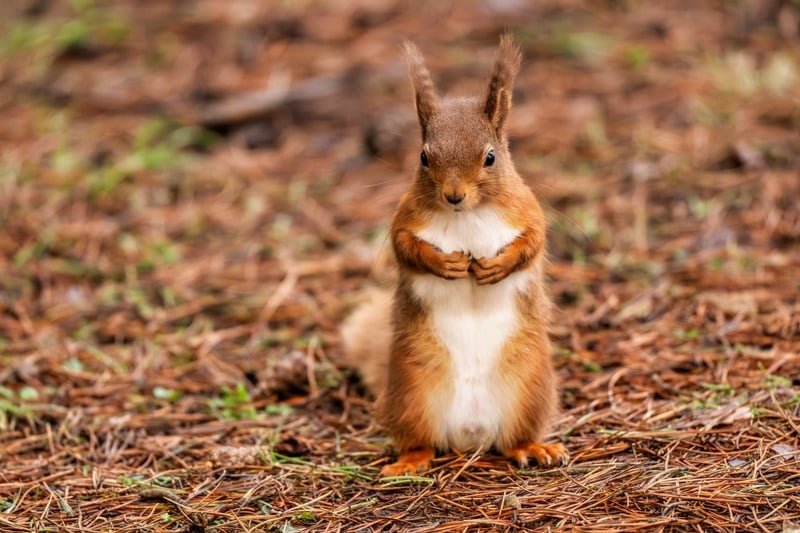
Save Our Reds: Join the fight
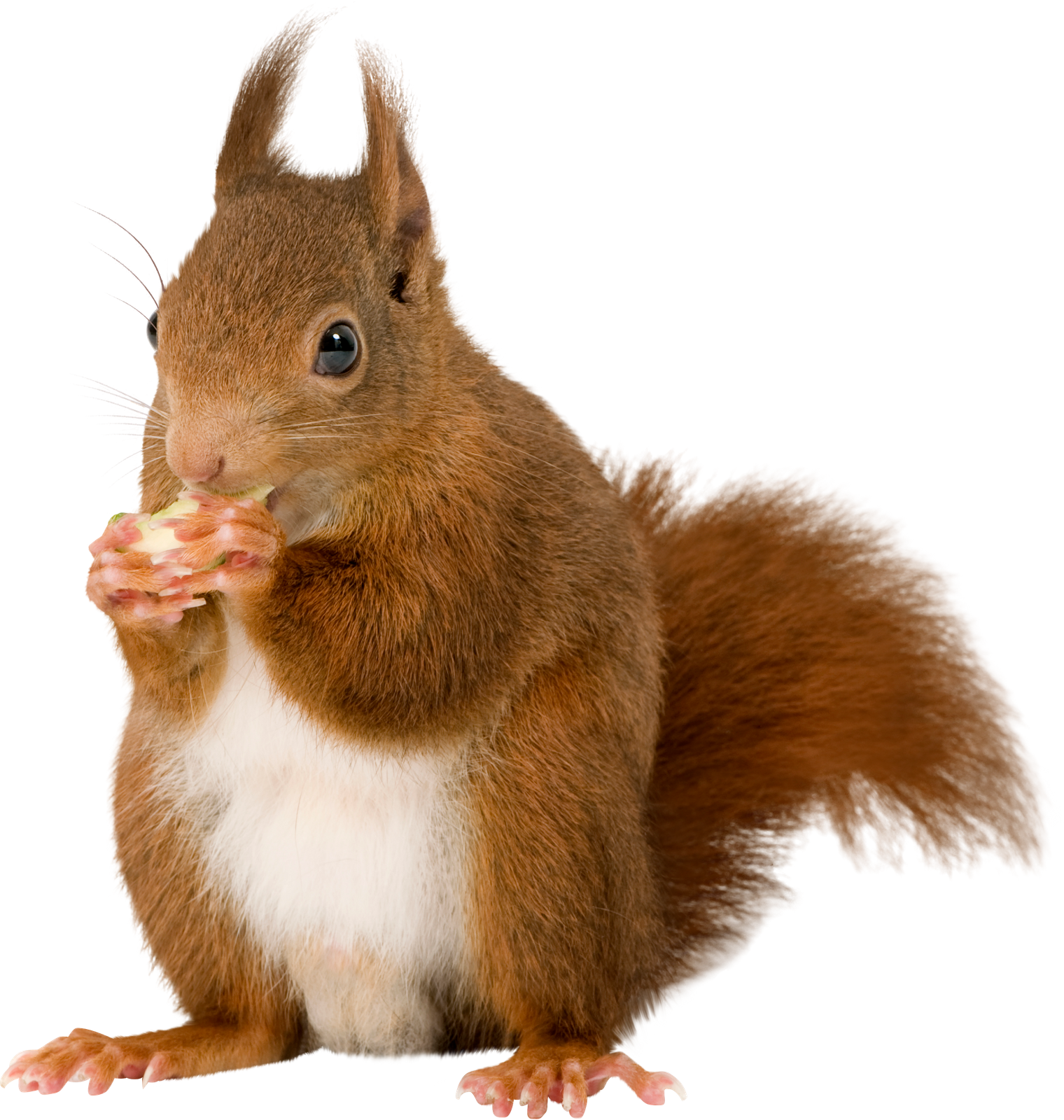
Red squirrels are disappearing from Britain. Once widespread, our native squirrel is now endangered and confined to a fraction of its former range.
Save Our Reds is calling for a coordinated recovery plan for Great Britain: stronger legal protection, proper enforcement, real biodiversity safeguards, vaccine investment, and rangers on the ground.
Read our Red Squirrel Factsheet →
As seen in BBC, Sky, The Guardian, Country Life, BBC Wildlife
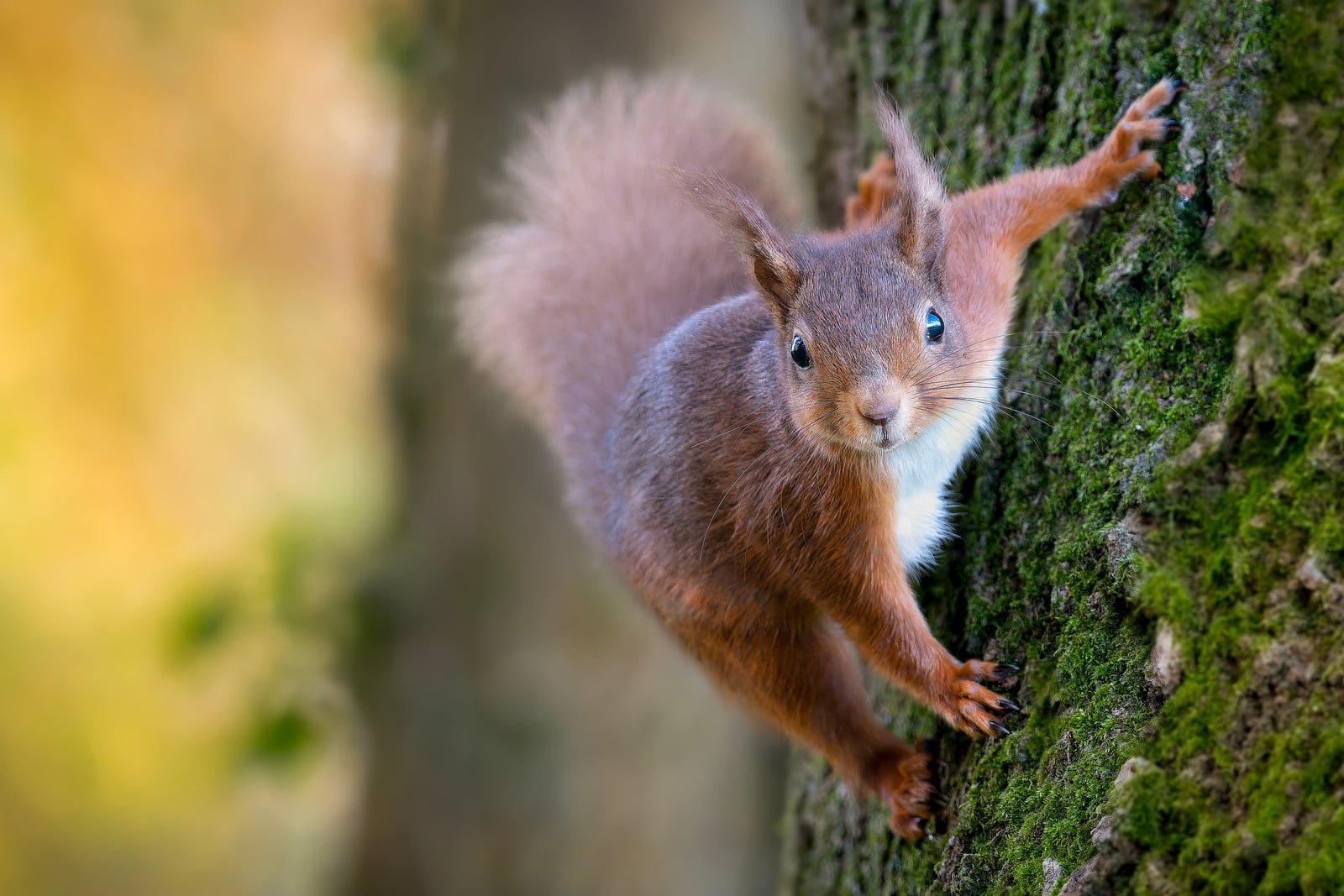
Why it matters
Once common across the UK, these shy, iconic mammals now cling to survival in just a few woodland strongholds. Red squirrels are now classified as Endangered on the Great Britain Red List. In England and Wales, they are Endangered. In much of England, they are all but gone.
Once numbering around 3.5 million, reds are now confined to pockets of northern England, Scotland and a handful of islands. Somewhere in the region of 120,000 to 290,000 remain across Britain, estimates vary, with around three-quarters of those in Scotland. In England the picture is starker still: Natural England’s modelling puts the population as low as around 15,000.
The reason is not mysterious. Grey squirrels, brought here from North America by the Victorians in the 1870s, now number around 2.7 million. They outcompete reds for food and habitat, and they carry squirrelpox, a virus they survive and reds almost never do. Where squirrelpox takes hold, red squirrels can decline 17 to 25 times faster than through competition alone.
And all the while, the woodland itself is disappearing. It is illegal to harm a red squirrel, yet felling the trees they live in is not, and it is happening in the very places where reds are making their last stand.
In April 2026, Natural England published its Red Squirrel Recovery Strategy. Its conclusion was unambiguous: if nothing changes, red squirrels face extinction across mainland England within around 25 years.
The science is settled. The evidence is in. What is missing is delivery.
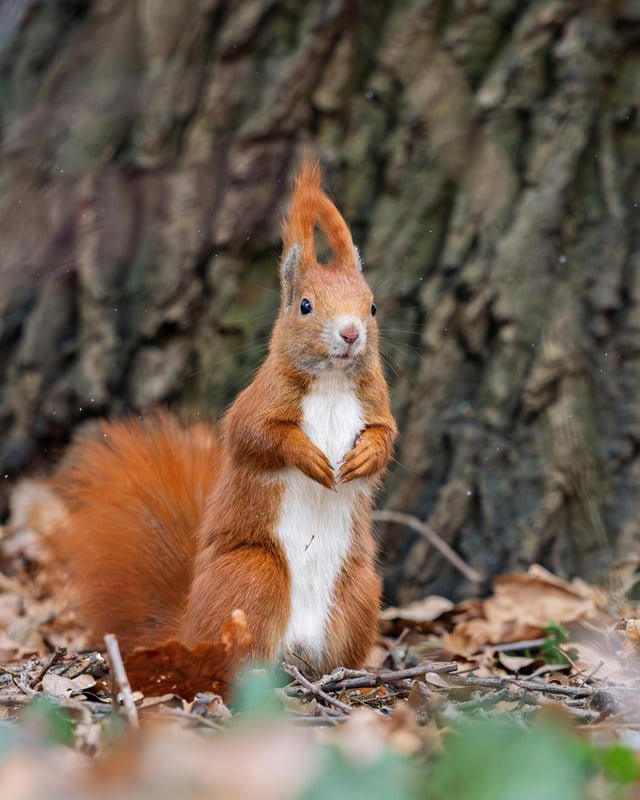
“I cannot think of a better mascot for our country than the red squirrel.” –
His Majesty King Charles III, then Prince of Wales, speaking at Levens Hall, Cumbria. The King is Patron of the Red Squirrel Survival Trust
What we’re calling for
We’re calling on the UK Government and devolved authorities to:
1. Legally protect red squirrels and their woodland habitats. Add red squirrels to the Conservation of Habitats and Species Regulations 2017, as beavers were in 2022. Establish enhanced protection for all known red squirrel habitats No large-scale felling without mandatory wildlife impact assessment, independent oversight and enforceable penalties. If a woodland supports red squirrels, it should not be cleared without enforceable protection in place.
2. Enforce existing wildlife law, with named accountability. Red squirrels are already protected in law. That protection is too often ignored in practice. Government must enforce existing legislation across all red squirrel areas, with clear responsibility placed on Forestry England, land managers and relevant authorities, and meaningful consequences where protections are breached.
3. Deliver and audit biodiversity commitments. Publicly funded woodland schemes already incorporate biodiversity design standards. Those commitments must now be delivered rather than simply written down, while safeguarding red squirrel habitat and canopy connectivity, with transparent monitoring and public reporting.
4. Fund and accelerate squirrelpox vaccine and grey squirrel fertility control research. Scientists at Bangor University have reported a protective vaccine against squirrelpox, and APHA’s oral fertility control for greys is a world first. Real progress has been made in both fields, but further investment is needed to move from laboratory promise to practical results in our woodlands.
5. Deploy rangers on the ground now, not next year. Dedicated, trained wildlife rangers must be deployed immediately across red squirrel strongholds in Great Britain to monitor populations, support volunteers and respond rapidly to threats. Protection on paper means nothing without presence on the ground.
Britain does not lack red squirrel policy. It lacks enforcement, accountability and joined-up habitat protection. Conservation without delivery becomes managed decline.
“Grey squirrels don’t respect county borders or local authority areas.”
– His Majesty King Charles III
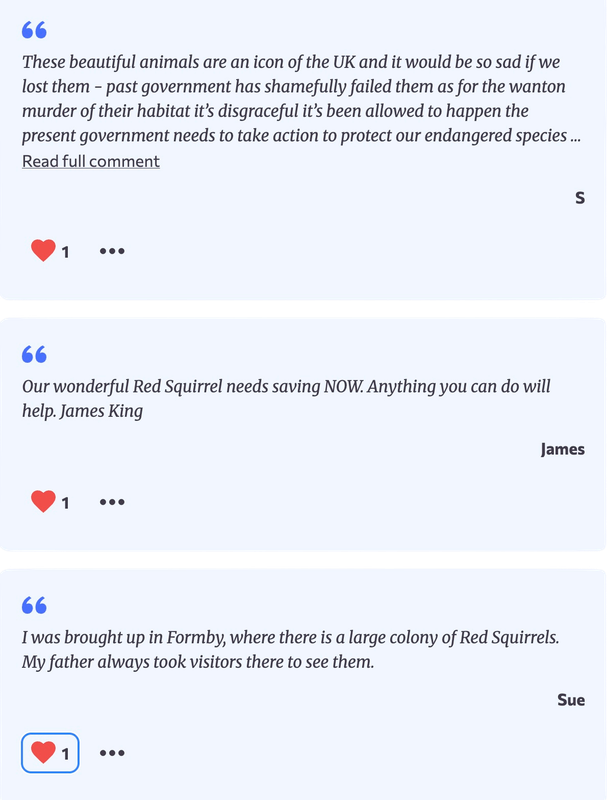
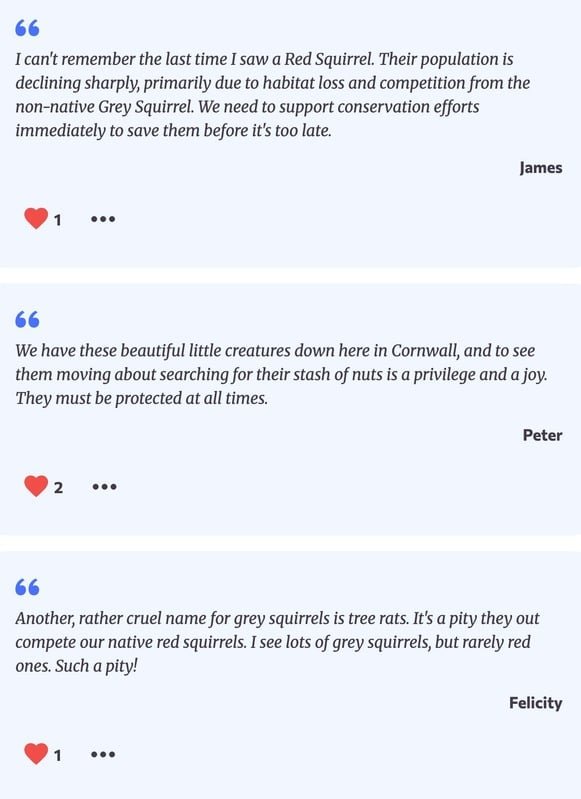
Just a selection of the +100,000 supporter voices
The crisis in numbers
Endangered on Britain’s Red List for Terrestrial Mammals
Somewhere in the region of 120,000 to 290,000 reds remain across Britain, estimates vary
Around three-quarters of them are in Scotland
In England, as few as 15,000 are left
Their range in England has contracted by as much as 95%
Around 2.7 million grey squirrels now occupy the woodland reds once held
Natural England warns reds could disappear from mainland England within 25 years under current conditions
‘If you care about red squirrels, now is the time to act. Every signature, sighting report, MP email and social share helps build pressure for change.’